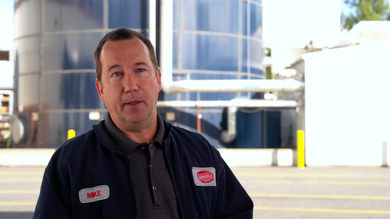
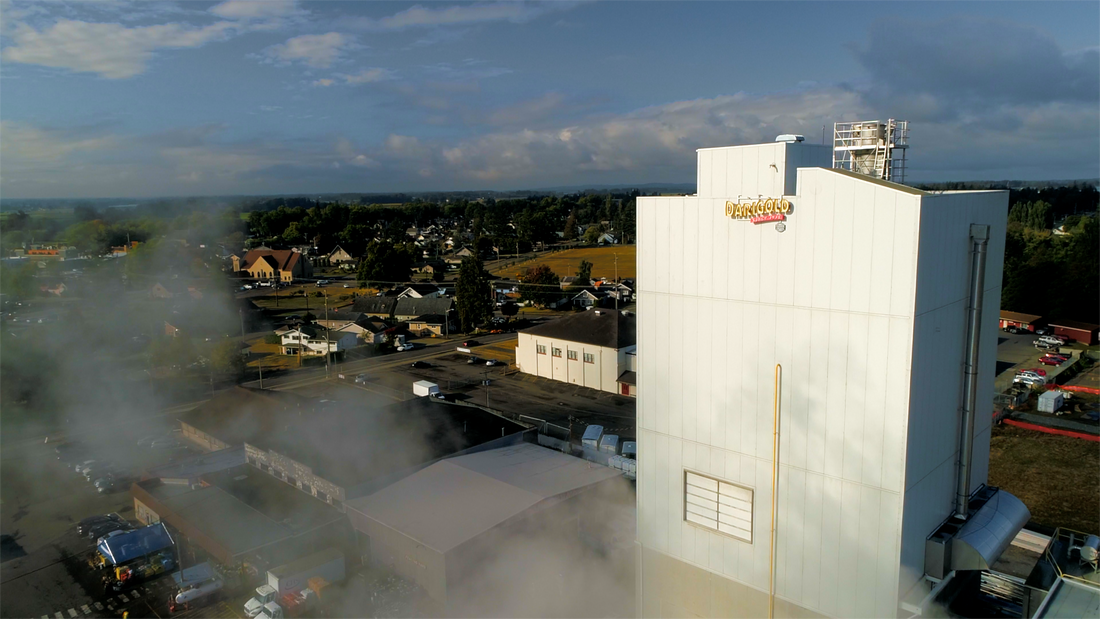
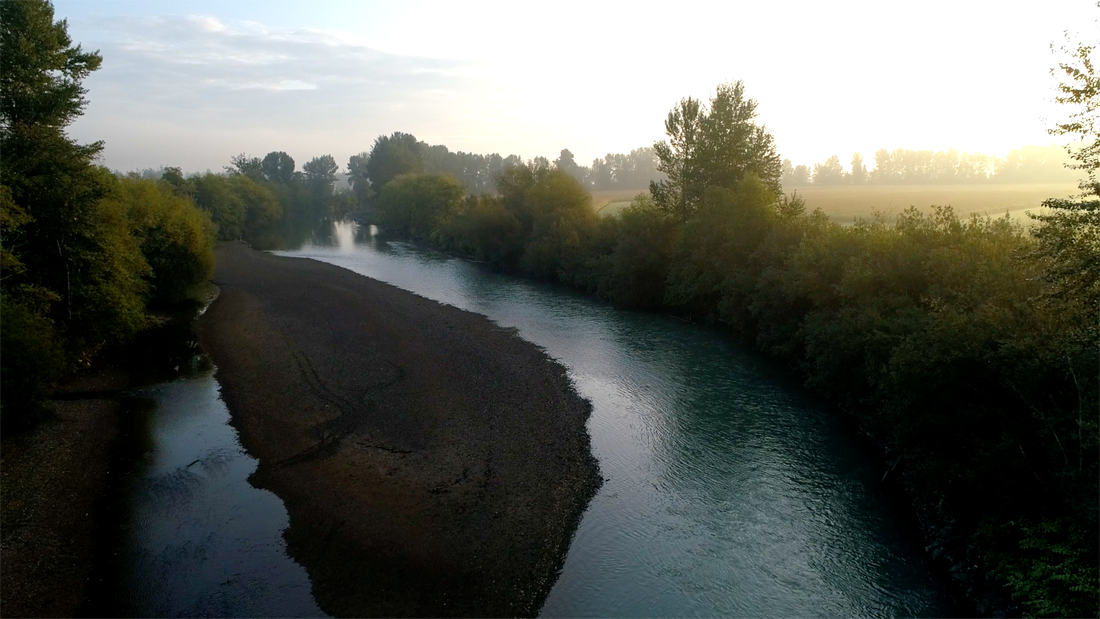
 Mike Jaynes, who works as Environment Compliance Manager at Darigold sees this project as a win for both the city and the dairy industry. Mike Jaynes, who works as Environment Compliance Manager at Darigold sees this project as a win for both the city and the dairy industry. WHATCOM COUNTY, Wash. – The Lynden Plant is what Darigold, a northwest dairy farming cooperative, calls their ingredient plant. Using milk shipped in from dairy farmers across Whatcom County, they produce milk powder that supplies food processing facilities all over the world. Yet this isn’t the only “ingredient” that Darigold contributes to the greater community. The water by-product derived from the dehydrated milk supplies a clean and reliable source of recycled water. “We are always looking for different ways that we can reduce our impact,” said Mike Jaynes, Environmental Compliance Manager at Darigold. Although brainstorming on it occurred for years, a project finally completed in 2022 provided an impactful opportunity for Darigold. “In the early 2000s, Lynden’s water rights were exceeded and the Department of Ecology was encouraging us to find new sources of water,” shared Lynden Mayor Scott Korthuis. In a plan facilitated by the city of Lynden, water that was once a wastestream became a valuable resource. Thanks to Darigold, the Department of Ecology, and a team of leaders in the city of Lynden, a steady flow of distilled water from Darigold now enters the Nooksack River using an old water line at the Hannegan Road bridge. 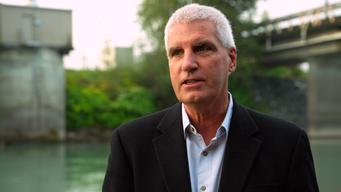 Having pushed for this project for years, Mayor of Lynden, Scott Korthuis, is proud to see it finally completed. Having pushed for this project for years, Mayor of Lynden, Scott Korthuis, is proud to see it finally completed. With thousands of pounds of powdered milk produced weekly by Darigold and the population of Lynden continuing to grow, this unlikely partnership makes sense. In doing this service, Darigold reduces their output of wastewater and provides the city of Lynden with a water rights credit. While the water coming from the plant is tested regularly, any water of concern goes through treatment at the Lynden Water Treatment plant. In all, claimed Jaynes, the wastewater actually comes out significantly cooler and cleaner than the water in the river itself, and in turn, having positive effects to the biology of the river. The Nooksack River, which plays an important role in the city of Lynden by supplying water to the city of Lynden and creating habitat for an array of wildlife, is the main water source that moves through Whatcom County. “It’s exciting to see how Darigold can take milk and make a dry product of it ... and that milk is supplied to customers throughout the entire world, and a side benefit is that Lynden gets that water from it.” summarized Korthuis. To learn more about how the project came into fruition, read stories from Darigold and the Lynden Tribune.
Story made possible thanks to our sponsors and collaborators
0 Comments
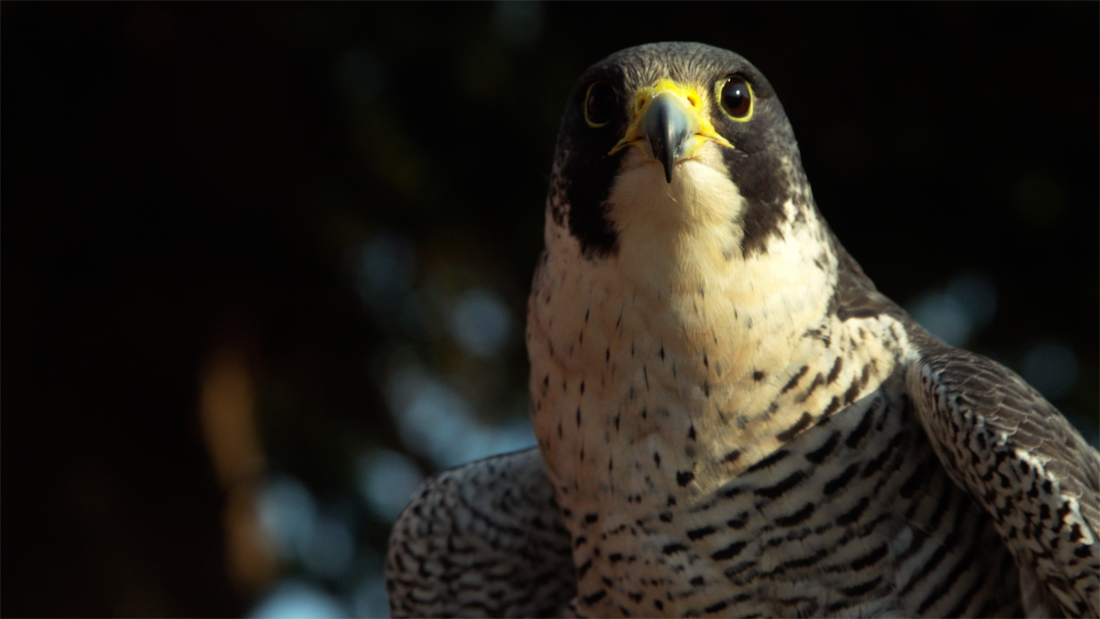
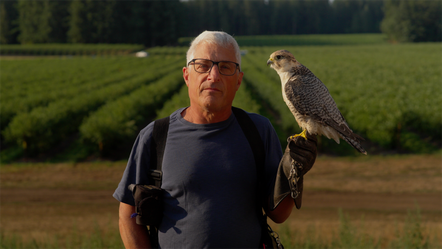 Frank Lapsansky, a Whatcom County local, has partnered with fruit farmers across the west coast, using his falcons as a way to manage pests on site. Frank Lapsansky, a Whatcom County local, has partnered with fruit farmers across the west coast, using his falcons as a way to manage pests on site. LYNDEN, WA – Whatcom County berry farmers are turning to a surprising method of protecting their crops from a damaging pest…without the use of pesticides or lethal means. The European Starling can eat up to 15% of a fruit crop and cause even more in damage and spread of disease. Pest control for deterring starlings comes in many forms. For Enfield Farms, a berry grower in Whatcom County, security of their crop comes by using trained falcons like cooper's hawks. These raptors have been proven to eliminate 99% of the pest birds in fruit fields and orchards across Washington state. Falconry on farms works because the starlings and other pest birds recognize the trained falcons as a predator. “I [use] birds that are indigenous to this area that eat starlings and have taught it behaviors to make it look like it is hunting.” says Frank Lapsansky, a falconer based in Whatcom County. Lapsansky has been flying his birds over the fields of berry growers and other fruit crops for many years. The act of flying a bird over a field for a few minutes every day can deter pest birds that would otherwise cause significant damage to the fruit or crop. After all, the hard work put into the crops were not meant to be a food source for the birds, but for humans. The falcon’s presence promises security of the crop and higher yields for the farmer. 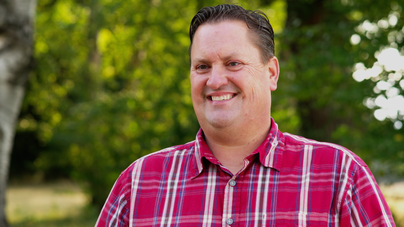 Kevin Berendsen, Agronomist at Enfield Farms, says that falconry has provided a level of bird control that they haven't seen from any other method. Kevin Berendsen, Agronomist at Enfield Farms, says that falconry has provided a level of bird control that they haven't seen from any other method. Enfield Farms, which has been using falconry as a pest control mechanism for over a decade, has seen the benefits of this strategy firsthand. Kevin Berendsen, agronomist at Enfield Farms, says that the falcons have taught the starlings that their berry fields are “not a sanctuary to come and eat”. As the falcon visits become more frequent in the fields, the starlings assume that the falcon lives there. Over time, although it is just an estimate, berry yield does increase. Berendsen and other members of the Enfield Farms team agree that “[Falconry] has provided a level of bird control that we have not been able to get through any other means.” This method has proven to be effective not just in berry, but many other crops across Washington state. It is a holistic and eco-friendly approach, and beyond that it proves to be more effective than streamers, cannons, and other loud noises to scare off unwanted birds. Story made possible thanks to our sponsors and collaborators.
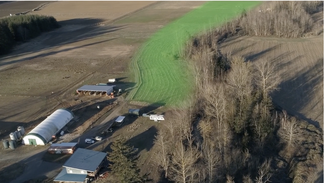 Riparian zone buffer on Alluvial Farms Riparian zone buffer on Alluvial Farms EVERSON, Wash. – “When it comes to buffers, there’s not really a one-size-fits-all” says Gavin Willis, Ag Water Board of Whatcom County. On Alluvial Farms, Katie Pencke and Matthew McDermott established a 180 foot buffer at their first-generation hog and hemp farm located on a tributary stream of the Nooksack watershed. According to Willis, “A buffer is a section of riparian zone plantings in between the creek and activity zone next to it”. Willis also notes that farmland is the most common type of land residing beside streams and rivers in Whatcom County watersheds. On a livestock operation, Pencke recognizes “There’s always going to be some type of run-off and we need to keep that out of the creek”. In the case of Alluvial Farms, putting in a riparian zone buffer as a filtration system just made sense. In the winter, their pigs are kept indoors and due to the heavy use of that area, Pencke and McDermott determined a filtration system must be present to protect the fish-bearing stream adjacent to their farm. However, as Willis points out, while farmland serves as a viable location for riparian zone buffers, not all farms require the same large buffers as the one established on Alluvial Farms. According to Willis, specific plant types and buffer widths are a major benefactor for determining the necessary buffer size and type on each given land area. Farmers and/or landowners should work directly with local agencies to create buffers unique to their situations and needs. For Pencke and McDermott, the buffer is part of their farm’s legacy and in the meantime, it provides an ideal habitat for a variety of wildlife including salmon, insects, birds, and native plants. Like all farmers of Whatcom County, they are eager to establish a future for agriculture through their work in restoring the ecosystem and creating a connection between consumers and their food. Learn more about their story at alluvialfarms.com/# Story coverage made possible thanks to support from
WHATCOM COUNTY, Wash. -- Imagine an opportunity presented to you that is both beneficial financially and ecologically — a program that helps you restore your livelihood and promotes a beautiful place to live.
The Conservation Easement Program (CEP) is a voluntary program created to protect working lands in important ecological areas. Whatcom County compensates landowners for the value of their land by paying the landowner the value in residential development potential. Instead of developing residential spaces or even farming the land, land is set aside for the purpose of conservation and is now protected. Better yet, it comes with a significant financial perk for the farmer. As Becky Snijder van Wissenkerke, CEP Administrator, puts it, “This program allows farmers to unlock the value of the development right potential, and they can reinvest that money into their farm.” Cougar Creek Ranch is one farm that has benefitted from CEP. Karl Prisk, landowner of Cougar Creek Ranch, set aside some land on his farm that is completely protected, and un-farmed. Yet, he sees this action of land conservation as a positive step for his ranch. Following in the footsteps of previous generations on a farm that has been in his family since 1912, his mindset in farming is protecting the land in order that future generations can reap the benefits too. With the funds from CEP, Cougar Creek Ranch was able to rebuild their barn, put in new water lines, and more. Furthermore, putting easement on land with creeks and forested areas like Cougar Creek Ranch protects areas like riparian zones. This prevents erosion and becomes a natural habitat for species like salmon, cougar, deer, and native plants that support a healthy ecosystem. Thus, this is an action that benefits many species all around. “CEP was invested in our vision… and keeps farms farms” says Prisk. It is clear that taking the action on protecting this land is a valuable option in the toolbox for farmers when it comes to conservation of farmland in Whatcom County. To learn more about the Conservation Easement Program, go to https://whatcomcounty.us/573/Conservation-Easement-Program  Nearly 4000 acres of riparian buffers have been planted in Whatcom County through the Conservation Reserve Enhancement Program. Nearly 4000 acres of riparian buffers have been planted in Whatcom County through the Conservation Reserve Enhancement Program. Kamm Creek flows through the northern parts of Whatcom County, starting near the Canadian border, meandering through farmland and eventually flowing into the mainstem of the Nooksack River. Like other lowland streams in the Nooksack Basin, Kamm Creek provides critical spawning and rearing habitat for salmon. Unfortunately, a culvert near the headwaters of the creek blocked access to its upper reaches, limiting the amount of habitat accessible to salmon. Fred Polinder’s family had owned and farmed the tract of land where the culvert was located for nearly a century, and when the Whatcom Conservation District approached him about replacing the culvert with a bridge he was happy to oblige. Removing the culvert allows fish to more easily travel through the entire stream, and still allows the cows that graze in the area to access pastures on both sides of the stream. After completion of the fish passage barrier removal project, the Conservation District asked Polinder if he would be willing to participate in the Conservation Reserve Enhancement Program, or CREP. CREP is a voluntary stewardship program that pays landowners in order to establish riparian (stream side) buffers on fish-bearing creeks. “Along the creek we wanted to have a larger buffer so that we could work with having animals here, still be able to graze, and not do damage to the fish habitat,” said Polinder. Riparian buffers provide a number of benefits to salmon habitat. Among those are improvements in water quality by filtering runoff, stabilizing stream banks with root systems, providing shade to keep water cool, and creating habitat complexity and supporting insect populations that act as food for salmon. Since 2000, the CREP program in Whatcom County has created riparian buffers on nearly 230 miles of stream banks, with over 1.4 million seedlings planted. You can learn more about the CREP program at https://www.whatcomcd.org/crep 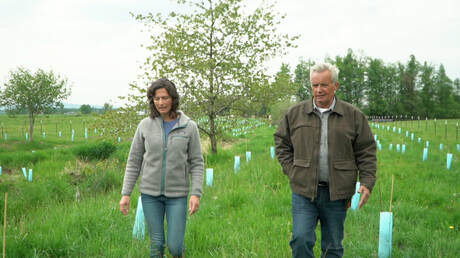 Riparian buffers were installed that extend 50 feet from each bank of the stream. Story coverage made possible thanks to support from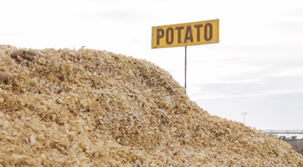 MESA, Wash. -- Coulee Flats Dairy, in Mesa, Wash., uses leftover human food to feed their dairy cows. “Cattle are the ultimate upcyclers for the byproducts out of the northwest,” said Luke Dynes. Dynes owns Wyatt Enterprises which takes food waste that would otherwise be thrown out and delivers it to farms. “The beef and dairy market alone here, is moving about 5,000 tons a day out of landfills to create milk and meat in the state of Washington,” Dynes said. Coulee Flats owner Case VanderMeulen says they will feed their cows about 100 pounds of feed a day. “Which is over 700,000 pounds of feed a day, which is approximately 11-12 truckloads a day for just the milk cows,” he added. When Coulee Flats Dairy receives food waste from Wyatt Enterprises, they will have a nutritionist come up with the proper rations for the cows. All of the different ingredients are carefully mixed. “Our goal is to feed the cows the same ration day in, day out,” VanderMeulen said. “Cows are a creature of habit so they like it the same way every single day,” he said. “If cows are well taken care then they will do their job well.” The farm’s nutritionist, Judd Higgins, says it takes a team to make sure the cows are healthy. “We work as a team here on the dairy, between the producer, the farmers that grow the food for the cattle and the veterinarian to try to promote longevity and health,” Higgins said. “There are some ingredients that we add, whether it be yeast or probiotics that improve gut motility and rumen health. The total amount of ingredients in a ration from waste would be depending on your farm -- anywhere between 35-65%. And again, those byproducts -- some call them waste ingredients -- we would have to expend money and land resources in order to dispose of these. Where we collect these, bring these onto the farm, and put them into our diets, therefore we completely utilize those ingredients.” Coulee Flats will work in conjunction with their vet, Scott Kieser, to ensure their cows are healthy. “One of the most important components to animal welfare is providing a healthy ration,” Kieser said. “And the amazing thing about a cow is she is the ultimate recycler. Things that are byproducts from creating food for humans we can use those products in a dairy and the cow can benefit from those products and create milk and protein from those products while not having those products end up in the landfill.” Some of the products brought to Coulee Flats are from a dehydrated potato facility. “This facility makes your instant mashed potatoes, that type of stuff. The dairies need consistent feed year round, because cows do better on consistency,” Dynes said. “We are diverting that volume from going directly to a landfill to going back to feed and we’ve made it consistent -- so they are feeding it year round, and that’s a big benefit for everybody.” Story coverage made possible thanks to support from
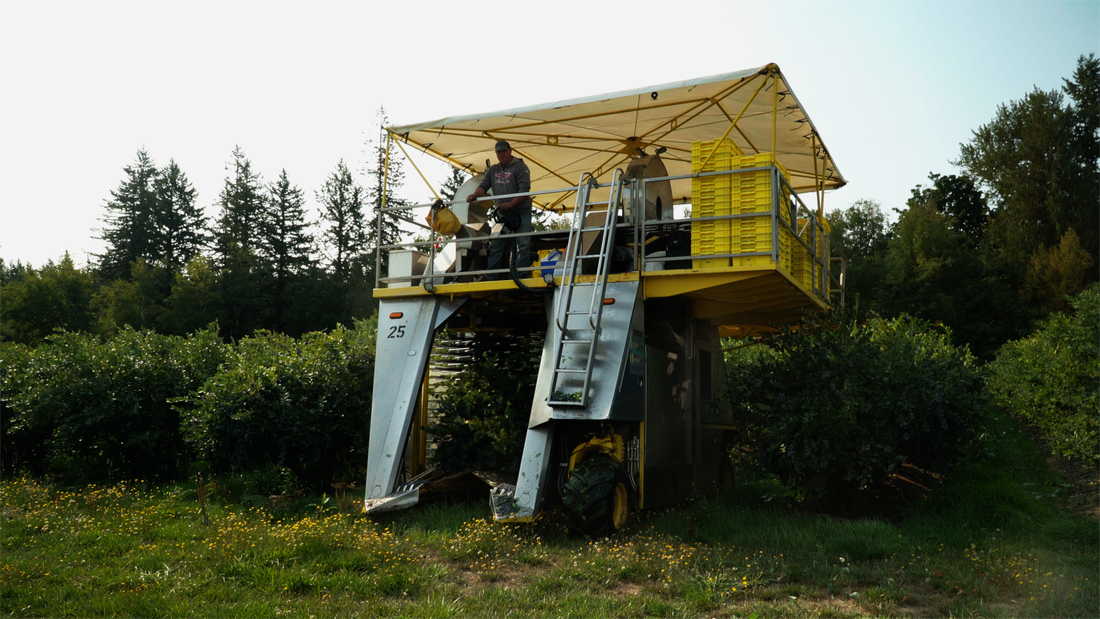
EVERSON, Wash. -- When Mariah and Shawn Butenschoen, owners of Breckenridge Blueberries and Probably Shouldn’t Distillery, tossed around the idea of using solar energy, they followed two philosophies that they have adopted in their time as farmers. Over the years, the Butenschoens were told they probably shouldn’t do a lot of things. “We were told we probably shouldn’t open a blueberry farm...and then we were going to go organic and we were told we probably shouldn’t do that, and low and behold we did it,” says Mariah, “When we were messing with the idea of a distillery we were told you probably shouldn’t quit your job and open a distillery, but we did it anyway.” Beating the odds helped them develop the philosophy that although they ‘probably shouldn’t’ do a lot of things, they still can succeed at them anyway. Not only did it give them a motto to follow, it created a unique name for their distillery, which crafts a variety of spirits using their blueberries and other Washington products. The second philosophy is one that has been important to the Butenschoens from the beginning. Their philosophy to be green and protect the environment is something that farmers across the world know to be a valuable foundation for a farm business. When it came to choosing solar, they wondered if they probably shouldn’t, but they did it anyway since solar energy on their farm fit with their philosophy. Working with Ecotech Solar and the Rural Energy for America Program (REAP), the dream came true. As Ty Chang with Ecotech Solar puts it, “There’s a natural fit between solar and farmers”. Farmers understand the value of growing their own food and creating renewable energy follows that same path. The Butenschoens, who own a small organic farm, felt that this pathway gave them the opportunity to promote a future for farming through sustainability. “We are already doing our best to keep from polluting our world, by doing this small part we make a difference,” says Mariah. With help from Ecotech Solar and REAP, which provides grants and loans for rural small business and agriculture producers, the couple was able to install a renewable energy system and make energy improvements to their business. The solar energy on their land now covers about one-third of the energy used in total including their shop, farm, and house. In the meantime, Mariah and Shawn aren’t the only ones who enjoy the solar energy improvement. Distillery customers who come in find it eccentric that a small business would have such a different approach. Yet, as Chang points out, farmers have the incentive to do something like this, not only to help the environment, but also for the future and legacy of their farm. “The future of solar electricity on farms just keeps looking brighter,” says Chang. Story coverage made possible thanks to support from
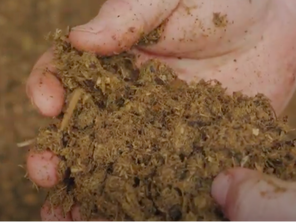 SKAGIT COUNTY, Wash. -- Skagit farmers are working together to protect the soil. Jason VanderKooy with Harmony Dairy says animal waste, particularly from dairy cows, plays a big role in soil health. “Cow manure is the complete package for nutrients for our fields,” he said. “It has all the nutrients needed to grow grass, grow corn, build the soil -- healthy soil. It’s important to have good feed for your cows.” Chad Kruger, Washington State University’s director of NWREC, says the diversity of the region’s agriculture defines the soil system. “We grow a lot of crops and have a lot of different livestock systems,” he said. “And, the diversity is something that defines our system. And underlying all of it is soil and how we take care of our soil both from kind of a traditional conservation perspective as well as the potential that soils could be a reservoir of a lot of really positive things that we have really yet to fully grasp and understand, much less be able to take advantage of.” VanderKooy says dairy and crop farmers are working together when it comes to soil conservation. “Farmers are seeing the benefits of animal waste on their fields,” he says. “So we have a pretty good system here now, and that's thanks to dairy farmers and crop farmers working together.” John Roozen, a bulb farmer in Skagit County, works with VanderKooy to get manure on his fields. “We farm about 2,200 acres and we rotate with other farmers that can grow any number of crops,” he said. “The importance of that rotation is paramount. Stewardship is about listening to the soil and listening to the crop and trying to interpret what it's telling you.” Kruger says the ecosystem is fragile. “Our producers in our region have realized that when we do something there is an effect and that we've got to be really careful about that in this fragile system that we have here,” he said. “So we're looking for that optimum where we can get the advantages of the manure application for soil health, get the environmental protection, but also keep the dairies viable and in business.” He explains that scientists learn from producers. “And so when we as scientists are working with producers there's this kind of old school mindset that the scientists will figure it out and then transfer it to the producers,” Kruger says. “And I think that's really actually backwards here. I think if you talk with most of the scientists that I work with, the best ideas come from producers.” He says then it is the scientists job to measure the effectiveness of what the farmers have done. “You only get one experiment, right? And so to be able to provide them tools and understanding that helps them do a better job is really rewarding.”
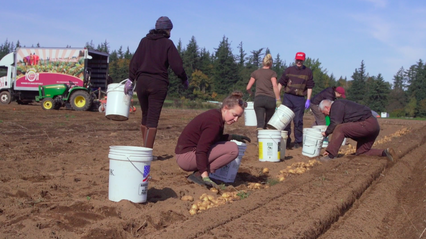 FERNDALE, Wash. -- A Ferndale farm has gone above and beyond to assist the Bellingham Food Bank for years. Boxx Berry Farms donates acres of their property to the food bank’s gleaning project, allowing the food bank access to fresh produce. “Bellingham Food Bank's agricultural programs really got started about 10 years ago when we inherited a gleaning project,” said Max Morage, special projects coordinator with the Bellingham Food Bank. “What we do with the gleaning project is we harvest food that would otherwise go to waste. So we want those apples. We want those carrots. We want anything that would serve families in Whatcom County.” “Today, we were here to harvest some potatoes that we had that were excess to us,” Mike Boxx, owner of Boxx Berry Farm said. “We have the ability to grow quite a bit of produce.” Boxx approached the food bank years ago with an excess amount of corn. Morage gathered a crew to go harvest the acre of corn. “Mike felt great,” Morage said. “He donated five bins of corn that would get shared all throughout Whatcom County and we were thrilled because we developed a relationship directly with a local farm.” Boxx says farmers are working hard to create a high-quality product, so anytime there is an excess, the food bank is getting that high-quality product. Eliza Andrews, the small potato gleaning coordinator at the Bellingham Food Bank, says that it’s important for the food bank to have access to fresh produce. “The Bellingham Food Bank is providing a service to people who use the food bank and we as the gleaning are providing a service to the farmer when we come to the farm to glean this product,” Andrews said. “If you could think of it in that way as a service, we're here pulling food from your field that you're not going to use and that it can be used somewhere else and that is pretty great. Those are the kind of services that we can provide so we both benefit. I get to go back to the food bank with all this delicious fresh product that was picked hours ago. I mean fresh is one thing, and then hours fresh is pretty cool.” Morage says the Bellingham Food Bank’s relationships with farmers is important to the food bank. “Working directly with farms to me feels a lot like we're connecting pieces of the food system together in a way that otherwise wouldn't happen,” he said. He says farmers don’t want to see their food go to waste. “Farmers who have spent an entire year planting, tending, watering, harvesting, looking for a market -- they don't wanna see food go to waste,” Morage said. “They got into farming because they like food and they like feeding people. Bellingham Food Bank depends on donations that organizations, like farms in our community, make and having a really strong group of those organizations that know each other and know what each other is doing is vital to the work that we do.”
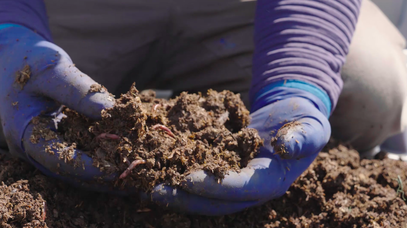 SUNNYSIDE, Wash. -- J&K Dairy in Sunnyside, Wash. is using worms to help clean and recycle their waste on their farm. They have brought in the Biofiltro system to their farm to help with cleaning their waste and creating clean water. “The Biofiltro beta system takes anaerobic water cleans it up with aerobic treatment and eliminates a bunch of the potential liability associated with it,” said Russ Davis with Organix. “For example, odor, methane, and loose nitrogen. And, it converts all of those things into things the plants can use and reduces those potential contaminants by about 90%.” The system uses worms to naturally filter the water. “So the worms are capable of doing what worms were built to do, which is to clean the ground or in this case, clean the water up,” Davis said. “So that we can produce as much clean water as a farm can use.” “The idea behind the Biofiltro is to clean the water up for the dairy farmer so they are able to utilize their water in a better fashion.” Davis said. “And hopefully create some sort of revenue benefit as well.” Matias Sjogren with Biofiltro says that within 4 hours of the water entering the system, it leaves clean. “So basically, we are transforming a liquid waste, to a high quality water for irrigation,” Sjorgren said. “With this system we are taking out the environmental, greenhouse gases impact that they have right now.” Jason Sheehan with J&K Dairy says it’s common for farmers to try new things for sustainability. “I think the biggest thing is that we want to show that dairyman are innovators and are always trying new things, trying to get better at what they do,” Sheehan said. Davis agreed. “Dairymen, by nature, are environmentalists,” Davis said. “Probably the best recycling machine out there. We like the story that cows can take food that people can’t eat, for example alfalfa and corn stalks -- what we consider waste, and they turn that into something that can be utilized for humans.”
|
AuthorWrite something about yourself. No need to be fancy, just an overview. Archives
November 2023
Categories
All
|


 RSS Feed